
According to a joint study by We Are Social and Hootsuite, more than 67% of the world's population uses mobile devices. Also, recent statistics show a significant increase in mobile traffic arbitrage potential over desktop traffic. By the way, for many people in the poorest countries, a smartphone is the only way to access the Internet, so imagine the opportunities for in-app advertising.
So, Affword offers an understanding in more detail how one of the most effective sources in traffic arbitrage — in-app traffic — works.
What is In-App in Traffic Arbitrage?
In fact, the name itself answers this question, as it literally means "in-app". In-app advertising is most actively used in mobile games — we all have to watch advertisements from time to time in between gaming sessions. Previously, users were offered to pay attention to new games and mobile applications, but nowadays, financial services and various goods are increasingly advertised here.
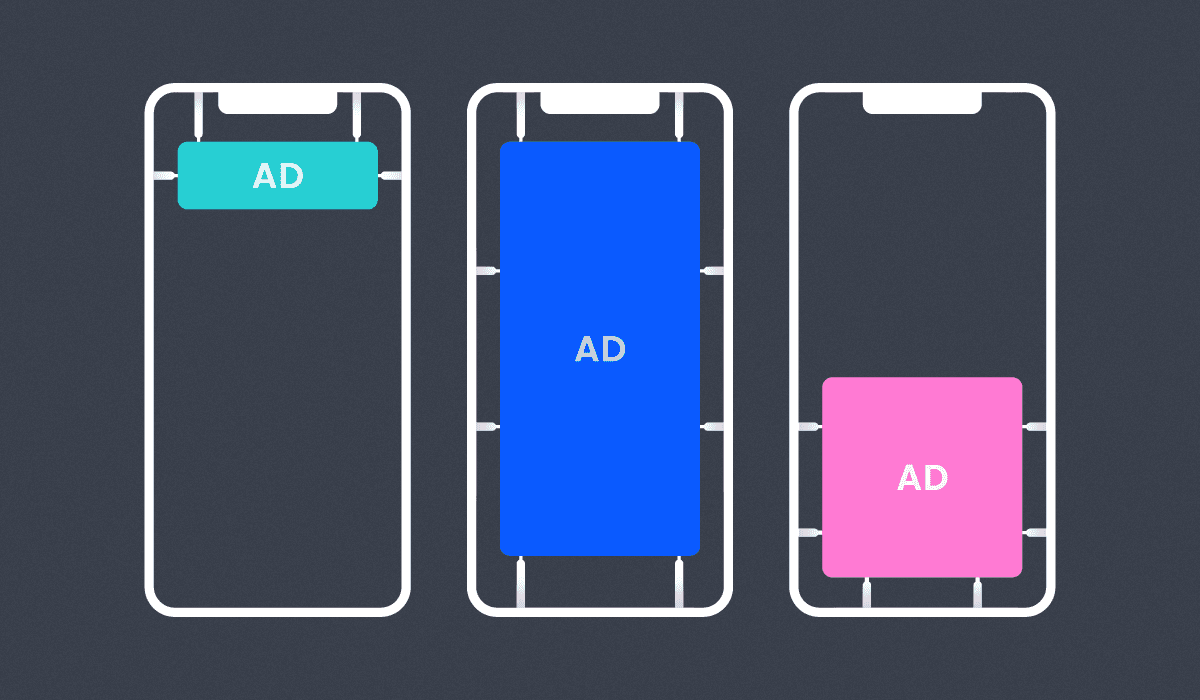
Typically, mobile app ads appear when you launch a VPN or advance to a new level in a game; the following formats:
- Rewarded (motivational) — an advertisement that offers a player an additional bonus (life) in the game for watching a video as a reward.
- Interstitial — an intermediate ad that appears between transitions within the app. It can appear in the form of a specific game or video.
- Banner advertising is a traditional format that remains relevant. Banners can be both static and animated.
The first two types of advertising interrupt the use of the app and showcase creatives in full screen, while banners appear in parallel with the app and do not interrupt the process.
In terms of presentation, native advertising works better — it's about matching its design to the design of the app itself. Organically embedded advertising does not cause acute irritation and is perceived by users with more trust;
The Working Principle of In-App Traffic
The in-app marketing network allows developers to embed their own code directly into the application and receive a share of the profits from app monetization. It should be noted that this market is already divided between large advertising networks, so advertisers may face rather strict requirements for creatives, which makes the promotion of dark offers somewhat difficult.
The following advertising models are used for payments on the platform:
- CPI is a model that involves app installs;
- CPL — payment per lead;
- CPA — payment per targeted action.
You can promote a variety of offers through app-based traffic, but the best performance is demonstrated by those related to quick earnings. In general, the result of mobile ad campaigns in any vertical, whether it is gambling, product, or data, depends on the approach chosen by the webmaster. The mobile audience is focused on useful applications, but it is quite capable of being interested in unrelated products from third-party resources. Thus, the main secret of success in in-app traffic is high-quality, spectacular creatives that attract attention and intrigue the user.
Currently, the hottest verticals of 2025, shaped by the latest mobile advertising trends, are:
- gambling/betting (cyber betting)
- cryptocurrencies
- finance
- games
- data;
- e-commerce.
It is worth noting that traffic arbitrage apps are highly trusted if they are placed in a marketplace. However, a full-fledged application is more expensive to develop, so webmasters can use web applications. To increase the level of trust, they are “packaged” in an apk file and placed in a mobile marketplace. In general, this approach increases the cost of the application due to the need to upload it to the store and proxy accounts for marketplaces, but it is still cheaper to produce.
In-App Advertising: Advantages & Disadvantages
The value and potential of the source can hardly be overestimated, as In-App traffic allows you to attract any users who use applications to access the Internet. Among the advantages of the source:
- wide coverage of different segments of the population;
- guaranteed viewing of the commercial;
- soft moderation in advertising networks: even the suspicious Facebook is much more favorable to apps in targeted advertising, especially if they are uploaded to Google Play or the App Store.
- high in-app conversion: mobile traffic is now many times higher than desktop traffic. To increase the conversion rate, when setting up the targeting settings, you can choose applications that are close to the subject of the offer;
- minimal effort for the targeted action: thanks to payment systems in the smartphone, you can pay for the purchase in a few clicks;
- built-in push notifications: installing an app automatically subscribes to push notifications, while websites have to send a request for them, and some browsers can simply block them;
- long-term interaction and sustainable app monetization: if you use your own applications, you can earn money as long as the user is a subscriber;
- a huge selection of creatives: bright visuals with various special effects make it possible to keep the user's attention. The most successful approaches of competitors can always be spied in spy services.
An equally pleasant bonus: in order to promote In-App, webmasters do not need to farming accounts or buy ready-made ones, warm them up, or use cloaking. However, you will not be able to pour money into black-hat offers either.
Among the disadvantages that will be faced, difficulties primarily arise with advertising networks:
- Each of them has its own specifics to adapt to and its own payment methods;
- Some networks may use bots to increase payouts, which reduces the effectiveness of the advertising campaign;
- A number of restrictions that do not allow the promotion of black and frankly gray offers, and if the arbitrage marketer tries to circumvent the prohibitions, there is a risk of getting banned without the possibility of recovering the ad deposit;
- Most ad networks favor large advertisers, so to compete with them, you need to have a considerable budget;
- Rather limited targeting options, especially compared to Facebook. To segment the audience, different ad networks offer to rely on gender, age, location, smartphone model, advertising app theme, etc.
Conclusion
It is believed that working with in-app is not the best choice for beginners, as it requires a detailed study of the source in addition to experience and skills in arbitrage. Also, you should not count on success with a small budget, for example, large teams spend from $10k daily on in-app traffic. Nevertheless, you should not give up on a promising and financially attractive mobile app because of the warnings of experienced colleagues, because the top arbitrage marketers were once beginners.
Successful app monetization from mobile apps is entirely achievable if the arbitrager has figured out how to work with in-app. By the way, the classic CPA verticals — gambling and e-commerce — are still not mastered here, so you may be the one who will be able to generate successful campaigns.
What affiliates are saying.