
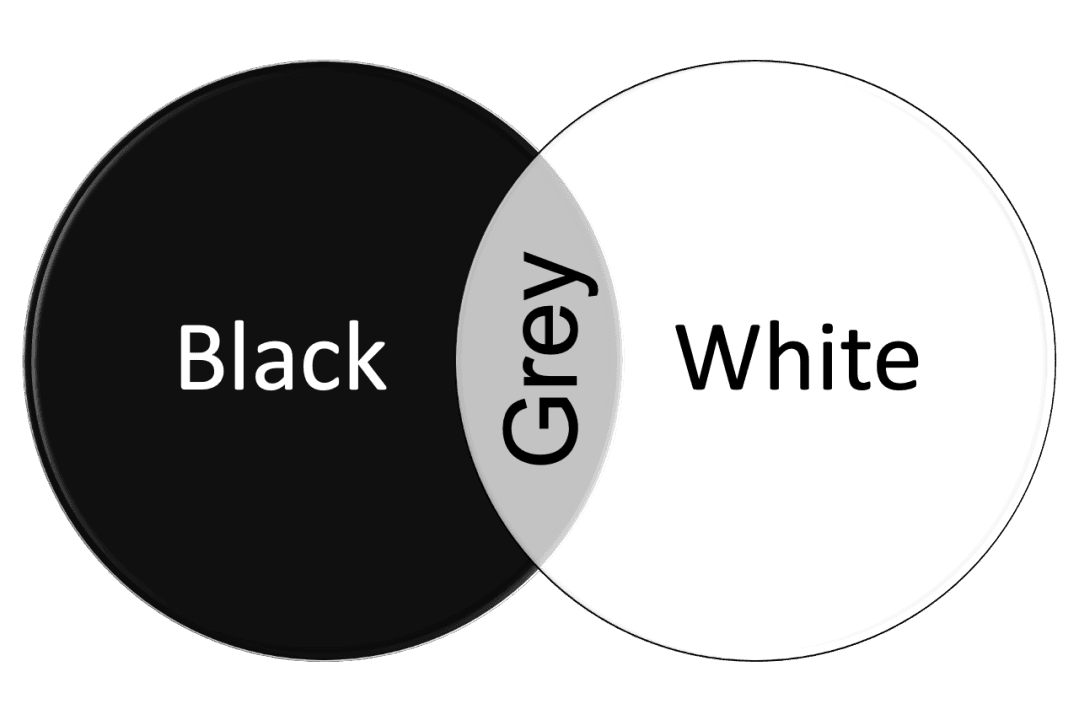
Even the sun has spots — this statement best expresses the essence of the conditional “color” division of offers. Currently, webmasters are increasingly inclined to the “bright side”. It is not only about the evolution of legal traffic arbitrage but also about the optimization of legislation — today, the question of the moral aspect and reputational risks when trying to make money on traffic arbitrage is no less persistent among arbitrators.
In this article, we consider the types of offers, their characteristic features, and how they work in Traffic Arbitration.
Arbitrage by Color: Principles of Offer Categorization
You might ask yourself: is traffic arbitrage legal? Well, traffic arbitrage is the attraction of users to the advertiser's website or landing page where the offer is placed.
Offers are divided into three categories according to the degree of legality, so to speak, “playing by the rules”.
Whitehat Offers
Whitehat legal traffic arbitrage is related to activities when a specialist invests budget, time, and skills in promotion:
- a legal product or service that meets its characteristics and does not mislead users from the target audience;
- the advertising campaign is carried out using standard methods not prohibited by the affiliate network (contextual advertising, banners, SEO, etc.), and the effectiveness can be tracked using popular tools such as Google Analytics*
- All participants in the arbitration act transparently and in a legal manner.
The result is a pure win-win strategy: the customer is satisfied with the purchase/service, the advertiser attracts a new customer, the webmaster can make good money on arbitration, and the PE receives a fee for mediation. In an ideal universe, everything works like this, but let's return to ours and talk about the main color in traffic arbitrage.
Greyhat Offers
Gray arbitrage circumvents to a greater or lesser extent:
- legal requirements;
- affiliate program rules;
- approval of advertising platforms, such as Facebook or Google Ads;
- expectations of the target audience regarding goods or services.
Frankly speaking, most offers in traffic arbitrage are 50 or more shades of gray. Even “white goods” don't always live up to their name and may offer products with a quality inferior to that stated in the advertisement. Let's just mention the meme “expectation vs. reality” with goods purchased online - in fact, these are gray goods.
Nevertheless, white offers can be found in the openly gray verticals of arbitrage traffic. As an example, casinos can be legally advertised on Facebook, provided that you receive written permission from the country of promotion and successfully pass the moderation of the advertisement. In practice, this procedure significantly complicates the arbitrage process, so webmasters mostly use gray schemes to attract the target audience, trying to avoid a ban from moderators.
Blackhat Offers

The dark side of arbitration, outright fraud in arbitration, and complaints against users, and sometimes against affiliate networks:
1) The user will be deceived in any case;
2) As for affiliate networks, even when promoting a white offer, if a webmaster tries to send in non-targeted traffic or traffic that is explicitly prohibited, it is considered fraud or illegal traffic arbitrage. In a serious PP, you can get an account ban and freezing of funds for this;
3) A specialist engaged in black illegal traffic arbitrage risks his reputation in the professional environment, and in some cases, a real prison term.
Characteristics of Offers Across Niches
The further away, the harder it is to mislead the user. Faced with fraud, people study the terms of sale more closely and trust less in flashy advertising. It is now a common practice to familiarize yourself with similar offers online before deciding to purchase a product. The most positive response from users is caused by well-known marketplaces that take care of their own reputation and guarantee customers a system of discounts, cashback and practice high-quality customer interaction.
It is increasingly profitable for advertisers to promote white offers, as it is a “long game”. For webmasters, white offers mean no headaches during PPC, which is why beginners are recommended to buy skill in white arbitrage.
Working with White Niches
If we talk about the profitability of arbitrage according to the color, the average ROI in Arbitrage (return on investment) of a white offer is 100%. That is, $100 invested in the RFP will turn into $200 (net profit of $100).
In simple words, verticals where products usually do not require the arbitrageur to resort to shady schemes when promoting the customer's website are considered white. These include the following:
- White goods - any household and hobby goods, clothing, footwear, delivery services, etc. are promoted. Along with high-quality goods, they also sell cheap Chinese goods, which can be used to make good money (about $20 per unit of goods worth $35-50);
- E-Commerce - Traffic is poured into large networks of online stores and marketplaces (AliExpress, Letyshops, WILDBERRIES, Lamoda, iHerb, Reebok, FarFetch, etc.). The arbitrator's remuneration is, on average 10% of the amount of the check from each referred client;

- Essay - advertising services for the production of student and research papers;
- HR traffic arbitrage offers - promotes advertising of trusted companies and services;
- Financial offers - it is exclusively about trusted banking structures. Instead, problems can arise from social boundaries, as community moderators may not approve of attempts to get users hooked on the credit needle;
- Mobile games/applications - there is no incentive for financial investments on the part of the user. The webmaster receives a reward for a confirmed registration in the game or the activity of an attracted player;
- Mobile app installs are another type of law-abiding arbitrage. Users are offered to install the app, and if they agree, the arbitrator receives their $1-2 of reward;
- Development of own platforms: for example, an attracted subscriber on Telegram costs $1, on Instagram - about $0.18. Therefore, you can reduce your own expenses by 4-6 times to earn money on your channel;
- Client projects or promotion of someone else's business: an arbitrageur brings clients, sets up a project ($550-1200), and then works for a monthly fee. Additional costs for white traffic are covered by the advertiser.
Working with Grey Niches
The gray niche requires more skill and experience from webmasters, as they will have to look for ways to bypass moderation, optimize the PPC, and apply various schemes of “whitewashing” advertising.
ROI ranges from 150-300%, which means that under favorable conditions, a webmaster will receive $300 of net profit for $100 invested.
Graytraffic arbitrage offers products that are designed to produce a lightning-fast wow effect that is difficult to confirm or deny. Here, we can give examples of various miracle remedies for weight loss, wrinkle removal (gut), the probability of winning through casinos or bookmakers (gambling, betting), or a life-changing acquaintance (dating).
Moderators strongly disapprove of such “promises”, so you will definitely get banned for “non-compliance with the rules of advertising”. However, if you prepare in advance, namely, choose the right approach in creatives and landing pages, and apply cloaking, you can keep driving gray traffic for a long time. To circumvent advertising bans, the arbitrageur sets up and runs ads, filtering traffic and dividing landing pages into those intended for regular users and those that should be shown to bots or moderators.
The gray verticals of the arbitrage include:
- Nutra: Dietary supplements, vitamin pills, enhancement-enhancement-enhancement-loss products, etc. Non-medicinal or cosmetic products that do not cause outright harm but hint at considerable benefit;

- Gambling - casinos, slots. One of the most profitable and competitive arbitration verticals. It is mostly based on the CPA model, where the payout is calculated on the deposit of the referred user. The smallest deposit is $18, while the arbitrageur receives $50 for the deposit. It should be understood that this should not be a one-time deposit, so you should constantly monitor the traffic. The vertical also has a Revshare payment model, a kind of passive earnings - the webmaster receives his percentage of the deposits/losses of the referred player. The downside of this model is that the arbitrager can be debited jointly with the bank if the user wins;
- Betting - bets on winning sports competitions and championships through bookmakers;
- Dating: websites and mobile services for online dating and meetings.
Working with Black Niches
Today, there is an increasingly loud voice about the inadmissibility of outright fraud and its use to make money on arbitrage. Black traffic creates significant problems for other market players - they have to invest more in promotion as advertising networks tighten requirements for everyone in response to the fraud of a few.
However, the main reason for the condemnation lies in the realm of morality and ethics. You must admit that it is difficult to accept a person who makes money from the deception, pain, and weaknesses of others.
Legislatures in all countries are trying to prevent online fraud, but webmasters face real jail time if they violate the laws of their country. You shouldn't expect that the responsibility lies entirely with the advertiser. If a criminal case is initiated, the arbitrator will be treated as an accomplice to fraud.

It is worth noting that the profit in black arbitration is the largest, with ROI ranging from 300-1000%. Such a percentage is due to the extreme complexity of promotion, as the algorithms of advertising platforms promptly respond to fraud and are constantly optimized.
A striking example is fraud with pre-bills, which is the name given to the spin-off credit provided by an advertising network. It looks like this: A payment card is linked to the account of a traffic source, for example, in social networks, and the first few small debits for advertising are made from it, say, for $50. It is worth noting that almost all networks allow you to roll over advertising in advance, so the next charge will be for a much larger amount, for example, $1,000. At the moment when the time of writing off is approaching, the dishonest arbitrator unties the card, thus heating up the ad network for a significant amount.
Another example of arbitrage complications is the activity of “carders” who steal money from payment cards. This scheme significantly spoils the market and leads to the fact that traffic sources accept fewer and fewer cards, and more difficulties arise when feeding accounts and flooding through different channels. A hidden but no less real threat is the purchase of stolen cards from carders.

As such, there are no black verticals, but offers that violate the law, moral standards, do not comply with the advertising model, and are intended to deceive the client and take over his or her funds are considered black. Here are some categories of black offers:
- Surveys: a classic example of money luring. Users are led to a website with a survey and offered to answer a few questions for a substantial reward. However, later it turns out that in order to receive the reward, you need to confirm your identity by sending a payment for a specified amount. The reward does not arrive again because you need to confirm something else or pay a commission, and so on. In fact, the funnel can be very long.
- Black traffic arbitrage on goods is a primitive deception when the user does not receive a paid order, or, if cash on delivery, a package with junk arrives in the mail.
- Pharmaceuticals: We are talking about alternatives to expensive drugs and steroids for athletes. This includes medicines for hard-to-treat diseases such as cancer and AIDS. Such drugs cost a lot of money but have no proof of their effectiveness.
- Malware, for example, offers to hack into the pages of friends and acquaintances on social networks or just a package of viruses.
- Pornography. Receiving income for the distribution of illegal pornographic content.
- Prohibited goods and substances: smuggling of alcohol and cigarettes, drugs.
- Miracle products promise to solve problems that cannot be solved - to restore sight, hearing, youth, etc.
We should also mention the sources of promotion of black offers. Powerful ad networks clearly track ads and take care of the rights and peace of mind of users, so it is critically difficult to promote junk in them. However, some “junk” sources have not yet disappeared as a phenomenon; they irritate users and rarely provide a normal ad. Among them are:
- Dorways: simple one-page sites with a meaningless set of words, each of which is a keyword and redirects the user to the landing page.
- Spam: still alive, but considered dirty among arbitrageurs because it gives low conversion rates and most advertisers don't like it.
- Clickers and pop-ups: aggressive advertising in half the screen or even the whole screen - it is extremely difficult for the user to find a “cross” to remove the banner from the monitor. Any attempt to do so takes the user to the landing page, so advertisers rarely approve of this method.

Conclusion
An experienced webmaster can immediately see the color and shades of an offer, but before finally choosing a way to make money, it is always worth finding out the smallest details.
In conclusion, Uaff emphasizes that black arbitrage, in addition to direct scamming, promotes goods and services aimed at human weaknesses - gambling addiction, a tendency to use heavy drugs, or hope for healing in the most complex diseases.
We propose to reflect on the true price of this dirty money - the loss of the last of one's funds, falling into credit slavery, and returning to addiction.
Does the end justify the means? This is a question that everyone can answer for themselves, depending on their moral compass. That is why it is not customary in arbitration to boast of dark cases - in addition to questions about the legality of promotion, black webmasters will be disliked by colleagues who, despite the temptations of big earnings, choose decency and self-respect.
What affiliates are saying.